


Animal rights groups are speaking out about how primates are treated during transport. At a recent press event, Linley Moothien from 4 Tipalat and Mansa Daby from Monkey Massacre shared shocking details. They described how these animals suffer long trips in poor conditions when sent overseas. Moreover, they warned that without urgent reform, this trade could face growing international backlash.
Airlines often place the creatures in small cages stacked on top of each other. These animals sometimes go without food for many hours—or even days. Videos shown during the event highlighted the stressful journey. However, the problems do not end with the flight.
Primates Face Long and Harsh Travel Conditions
Moothien explained that after the flight, trucks transport the group for many more hours. In some cases, workers leave them on the airport tarmac during stopovers, where the monkeys must endure heavy rain, freezing temperatures, or scorching sun.
“These acts clearly break the Animal Welfare Act,” Moothien said. “The law doesn’t allow anyone to treat animals in ways that cause distress.” He emphasized that officials claim to enforce these laws, yet the evidence proves the opposite.
Moothien also warned that Mauritius continues to exploit its macaques population for profit. “They are living creatures, not products,” he said. “We should stop ignoring their natural value.”
Monkey Exports from Mauritius Face Scrutiny
Mansa Daby gave more examples of recent exports from Mauritius. One shipment left on February 24 and split into three groups: some monkeys went to Brussels, some to Scotland, and the rest to England.
She pointed out that the monkeys were sent to Charles River Laboratories, which also owns Noveprim, a breeding company. “The company is selling monkeys to itself. How does that make business sense?” she asked.
Another shipment left on March 2 and arrived in the United States on March 6. Daby said the monkeys stayed in poor conditions the whole time.
She also disagreed with the common story that the monkeys came to Mauritius with Portuguese or Dutch sailors. “These monkeys are likely native to Mauritius,” she said. “They act differently than others of the same type, which suggests they evolved here.”
Government Says Rules Are in Place for the Monkey
Arvin Boolell, the Minister of Agro-Industry, responded to these concerns. He asked for a calm and fair look at the issue. He said all monkey exports must follow the rules set by the Convention on International Trade in Endangered Species (CITES).
“If anyone breaks the rules, they will face penalties,” he explained. “No one is allowed to pack animals too tightly in cages.”
Boolell also said the monkeys used for export are not taken from the wild. Only the offspring from breeding centers are shipped. “This helps avoid the spread of disease and protects nature,” he explained.
To protect animal health, the government follows strict safety checks during each step of the process.
Why Primates Are Still Used in Research
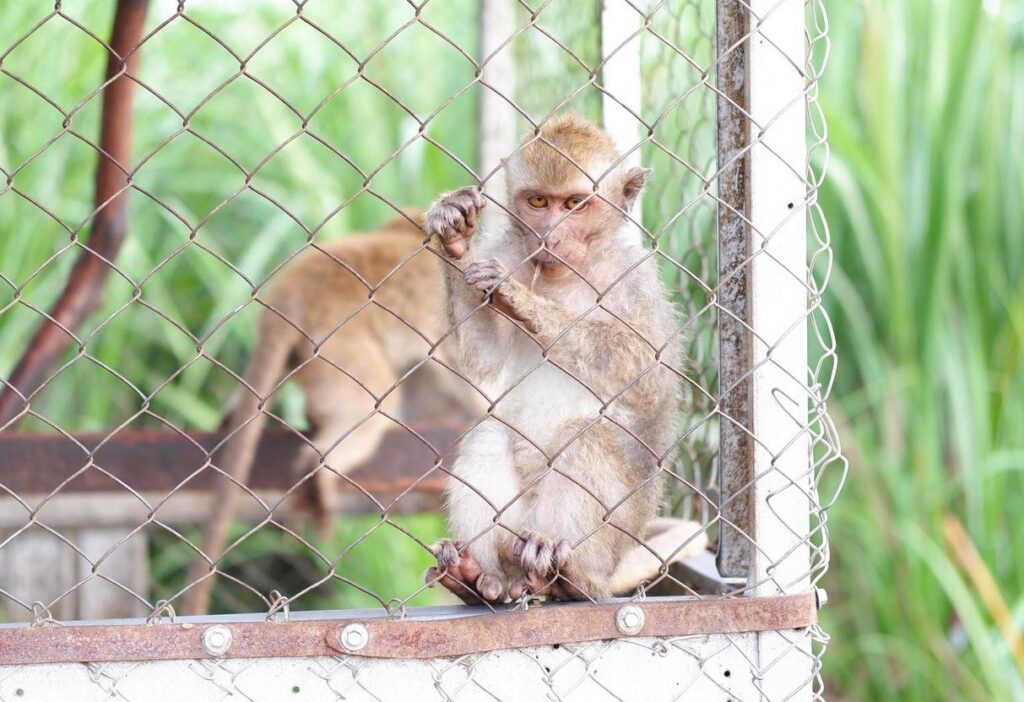
Boolell admitted that using monkeys in labs is a hard topic. Still, he said it is sometimes necessary. “We cannot test every medicine in a dish. For some diseases, we need live animals,” he said.
He also pointed out that this trade brings money to the country. The government plans to raise taxes on it and use the funds to improve animal welfare.
He confirmed that officials still want to stop monkey exports in the future, but change will take time. “For now, we’ve frozen the number of exports. We’re not allowing more,” he said.
New Plans for Animal Welfare in Mauritius
Boolell added that the government is working with groups like 4 Tipalat to improve animal laws. These talks aim to bring the laws up to date and deal with today’s concerns.
Besides the monkey issue, the minister talked about other plans. Right now, animal control teams catch stray dogs using nets. But the government plans to replace this with darts that make the animals sleep, which is less scary for them.
He also promised that the country will soon open a shelter and hospital for animals. It was emphasized that this is not just about kindness, but also about ensuring public safety.
A Bigger Problem to Solve: Ethics and Animal Treatment
This issue goes beyond just transporting monkeys. It asks a bigger question: how do we treat animals in our world today? Can we find a better way that supports science without causing pain?
Activists think current laws are not enough. They say stronger rules and more public pressure are needed. Groups like 4 Tipalat and Monkey Massacre hope their work will lead to real change.
Now the world is watching. Will Mauritius choose animal rights or business profits? The answer matters.
For now, what’s clear is this: monkeys cannot continue to suffer in silence. If leaders want to protect the country’s image and show real progress, they must act—and act soon.
Courtesy of lexpress
For article publication inquiries, feel free to get in touch.