

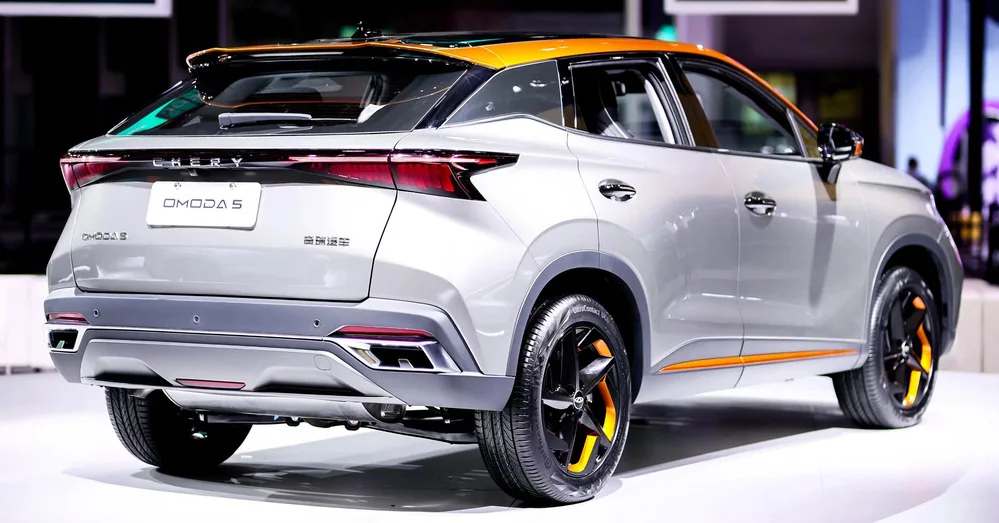
Chery Auto, a leading Chinese carmaker, is exploring the idea of building a car factory in the UK. This could reshape the British car industry. The plan is part of Chery’s larger localisation strategy, which aims to move production closer to its biggest markets.
Moreover, the company wants to reduce the impact of trade tariffs and strengthen its supply chain. By producing cars in the UK, Chery can avoid import taxes and better serve the British and European markets.

A Clear Signal of Long-Term Commitment
Chery’s UK Director, Victor Zhang, announced the company’s interest during a speech at the Society of Motor Manufacturers and Traders (SMMT) conference in London. He said local production is key to showing real commitment to the UK.
“If we, as a brand, want to be here, to be committed, [manufacturing] is something we should do,” Zhang said.
He added that Chery is still in talks with key partners and keeping all options open.
Why Local Production Makes Sense
Chery’s move is a smart response to rising tariffs. The European Union and the UK have both set taxes on electric vehicle (EV) imports from China. By building cars in Britain, Chery can skip these extra costs. It can also gain better trade terms under UK trade deals.
But this is not just about saving money. Building a factory in the UK would create jobs and support local businesses. It would also help Chery win trust from British customers, who may be more willing to buy cars that are “Made in Britain.”
Strong Start in the UK Market
Chery is already making progress in the UK. In September, it launched its Omoda and Jaecoo brands through 75 dealerships. The company has quickly captured 2% of the UK EV market.
Zhang said that many British drivers are open to Chinese brands. About 40% of customers are willing to consider them. He also highlighted Chery’s advanced hybrid cars, including one that can go up to 90 miles using energy recovered during driving.
A Wider Shift Among Chinese Carmakers
Chery is not alone. Other Chinese car companies are also expanding in Europe. High US tariffs on Chinese cars have pushed them to focus on the UK and EU instead.
For example, Geely Auto has invested over £3 billion in British carmaker Lotus, helping it move toward an electric future. EVE Energy, a Chinese battery company, is planning to build a £1 billion gigafactory near Coventry. This would surely support the UK’s electric car supply chain.
A European Footprint Is Taking Shape
Across Europe, Chinese companies are growing fast. In Spain, Chery has teamed up with local firm Ebro to build cars at a former Nissan factory. Meanwhile, BYD, another Chinese EV giant, is building a plant in Hungary.
These moves show a clear trend. Chinese carmakers no longer want to just export. They want to build and operate inside Europe.
The UK Government’s Role
The UK seems open to this new investment. At the SMMT event, Shadow Business Secretary Jonathan Reynolds said he is pushing for better trade deals with the US. A recent deal cut US tariffs on UK cars from 27.5% to 10%, but that’s still high.
Reynolds said he is working to remove more of these tariffs. Better trade conditions would also help attract more global investment.
A New Opportunity in a Shifting World
Politics may also be helping the UK. Tensions between China and the US are making Britain more appealing to Chinese investors.
Sherard Cowper-Coles, chair of the China-Britain Business Council, said Chinese firms are turning to the UK “because of Trump.” He added that diplomatic visits between the two countries are being planned to strengthen trade ties.
A Win-Win for Chery and Britain
If Chery goes ahead with the UK factory, it will be a big win for both sides. The company would gain a strong base in Europe, while Britain would attract major investment and new jobs.
Moreover, in a post-Brexit world, this move could help the UK secure a leading role in the future of global car manufacturing.
Courtesy of The Guardian
For article publication inquiries, feel free to get in touch