

Introduction
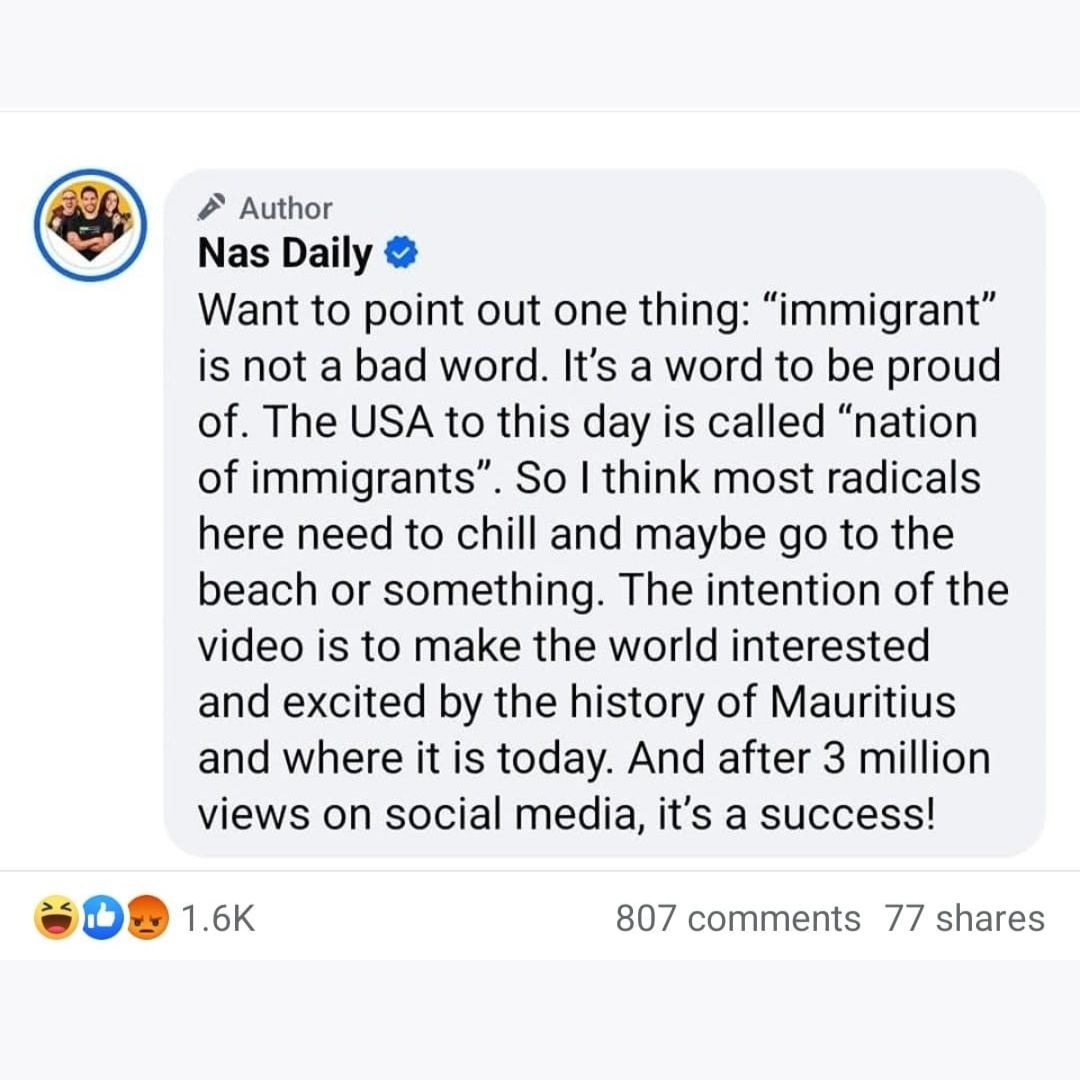
Nas Daily, the internationally renowned vlogger whose real name is Nuseir Yassin, has recently stirred controversy in Mauritius with his video titled “The 100% Immigrant Country”. Posted on Facebook on Tuesday, January 7, the video has sparked heated debates and outrage among Mauritians. The central focus of the controversy revolves around the use of the term “immigrant” to describe Mauritius and its people.
The Legacy of Immigrants in Mauritius
Balea, a Mauritian of fifth-generation Indian descent, has been closely affected by Nas Daily’s portrayal of Mauritius as a 100% immigrant country. Balea’s ancestors arrived on the island in the 1870s as indentured laborers from India. Over the years, his family has contributed to the cultural and societal fabric of Mauritius, and his strong sense of Mauritian identity stands in contrast to the characterization of his heritage as purely immigrant.
Mauritius, known for its rich diversity and multicultural heritage, has welcomed people from various backgrounds—Indian, African, European, Chinese, and Creole. These communities have integrated, contributing to the country’s development and sense of belonging. However, Nas Daily’s portrayal challenges this deeply rooted narrative.
The Controversial Video
In his 2-minute and 18-second video, Nas Daily introduces Mauritius as a nation made up entirely of immigrants. His description may have overlooked the complexity of the island’s history and the role of generations who have lived and contributed to the nation for over a century. During his stay from December 26, 2024, to January 1, 2025, Nas Daily captures moments of everyday life in Mauritius, but his characterization has been widely contested.
Reactions to Nas Daily’s Portrayal
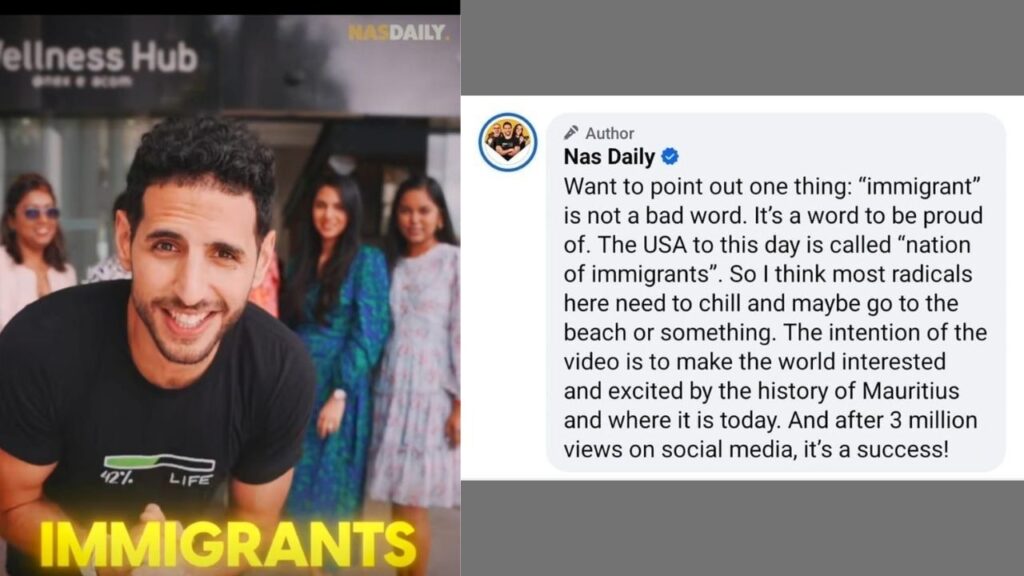
The video generated significant attention, with more than 12,000 reactions and 3,700 comments from Mauritians expressing their discontent. Many took to social media to refute Nas Daily’s claim, emphasizing their deep Mauritian roots. The reactions reflect a collective sentiment of pride in their heritage and identity.
One response emphasized the historical context:
“Elle [Mauritius] was discovered by the Dutch, then colonized by the British and the French. Our ancestors were either descendants of slaves or indentured workers. They were not immigrants. After five generations, we are all Mauritians.”
Another commentator stated:
“We may be descendants of immigrants, but we are not immigrants. I am of the fifth generation, it does not make me an immigrant.”
These responses reflect the nuanced understanding Mauritians have of their national identity, shaped by history and generations of coexistence.
Humor and Creative Responses
In addition to the serious discussions, some netizens have employed humor to respond to Nas Daily’s portrayal. Viral memes and posts poking fun at the term “immigrant” have circulated, demonstrating the creative ways in which Mauritians are engaging with the controversy. This lighter side has helped create a sense of community and resilience amidst the debate.
Conclusion
The controversy surrounding Nas Daily’s portrayal of Mauritius as a 100% immigrant country highlights the complexities of national identity and heritage. While his video sought to capture a snapshot of multicultural Mauritius, it inadvertently triggered a broader discussion on historical and cultural narratives. Mauritians, who have built a unique sense of unity through generations, continue to stand firm in their identity, embracing their diversity while asserting their shared belonging to the island nation.
Courtesy of Defi Media
For article publication inquiries, feel free to get in touch.