
Over the past decade, thousands of children in England have faced accusations of witchcraft. New statistics reveal the alarming scale of this issue. Since 2015, over 14,000 social work assessments have linked witchcraft accusations to cases of abuse. In the year leading up to March 2024, social workers recorded 2,180 assessments related to witchcraft. These figures highlight the ongoing prevalence of faith-based abuse, a global issue that continues to affect children worldwide.
The Link Between Faith-Based Abuse and Witchcraft Accusations
Faith-based violence, including the abuse of children accused of witchcraft, affects many regions and cultures around the world. In the UK, this issue has gained more attention in recent years as witchcraft accusations have steadily risen. Immigrant communities, especially those with African or Caribbean backgrounds, are particularly vulnerable. In these communities, people often blame children for misfortunes like illness, death, or financial difficulties.
The rise in witchcraft accusations shows how some adults target children as scapegoats. These accusations cause severe harm to the children involved, leading to physical, emotional, and psychological abuse. Some children even undergo exorcisms or other forms of ritualistic abuse.
Kindoki Witch Boy: A Film Bringing Awareness
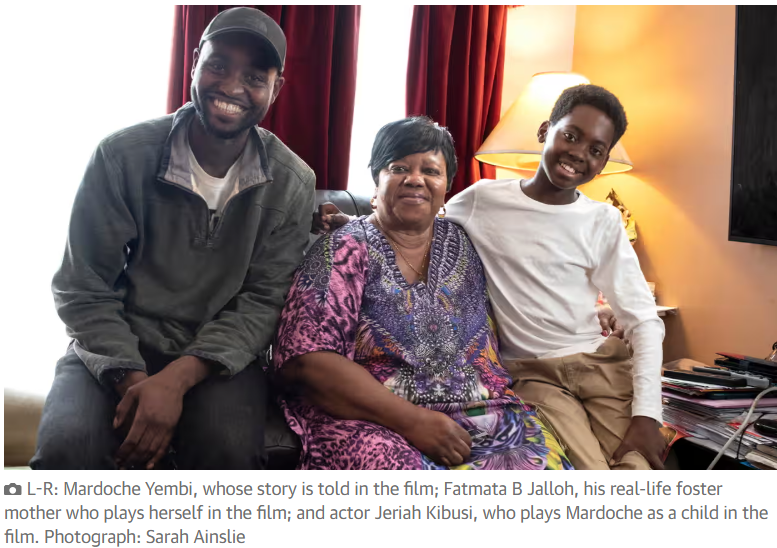
The film Kindoki Witch Boy brings attention to the plight of children accused of witchcraft. It tells the story of Mardoche Yembi, who was accused of witchcraft as a child in north London. After his mother’s death, Yembi’s father sent him to the UK at the age of eight. Yembi went to live with relatives who soon blamed him for the family’s misfortunes.
Like many children facing witchcraft accusations, Yembi underwent an exorcism. Although the experience deeply traumatized him, he eventually found support with a foster mother. She provided the care he needed, allowing him to thrive. Today, Yembi works to support young people who have gone through similar struggles.
Directed by Penny Woolcock, the film was shot in just nine days with both professional and non-professional actors. Jeriah Kibusi plays Mardoche Yembi, while Fatmata B Jalloh portrays his foster mother. Yembi hopes the film will raise awareness about witchcraft accusations and encourage children suffering in silence to seek help.
A Tragic Case: The Story of Victoria Climbié and Witchcraft Accusations
The film’s release coincides with the 25th anniversary of Victoria Climbié’s tragic death. Victoria was an eight-year-old girl who died after her family accused her of witchcraft. Her great-aunt, Marie-Thérèse Kouao, brought Victoria to the UK to give her a better education. Sadly, Victoria suffered horrific abuse and died from severe physical and emotional trauma.
Victoria’s body was discovered covered in 128 injuries, including burns and signs of malnutrition. Kouao and her partner, Carl John Manning, claimed that evil spirits possessed Victoria. They subjected her to exorcisms and forced her to sleep in a freezing cold bathroom, wrapped in a bin bag. The abuse she endured led to her death.
Despite multiple contacts with health and social services, no one intervened to protect Victoria. Manning and Kouao were convicted of her murder in 2001. The case sparked a national outcry and led to reforms in child protection services.
The Impact of Witchcraft Accusations on Children
Yembi and Victoria’s cases are just two examples of the broader issue affecting many children in the UK. Immigrant children, especially those from African or Caribbean backgrounds, are particularly vulnerable to witchcraft accusations. Families facing difficulties such as illness or financial hardship often blame children for their misfortunes. These children become scapegoats, accused of using witchcraft to cause harm.
The consequences for children accused of witchcraft are severe. Many undergo exorcisms or other forms of ritual abuse. Others experience physical violence, neglect, or abandonment. As a result, social services and health professionals have become increasingly involved in these cases. Many children are removed from their families to keep them safe.
However, public awareness remains low. Children accused of witchcraft often feel isolated and have limited access to support. They may feel ashamed, frightened, and unsure of where to turn for help. Initiatives like Kindoki Witch Boy are essential in raising awareness and providing a voice for these children.
Yembi’s Message of Hope for Children Accused of Witchcraft
Mardoche Yembi has devoted much of his life to helping others who have experienced the same trauma he endured. Through his film and his work with young care leavers, Yembi aims to create a support system for children facing similar abuse. He hopes the film will encourage children to speak out and seek assistance.
Reflecting on his own childhood, Yembi said that if a film like Kindoki Witch Boy had existed when he was young, he would have felt less alone. He wants the story to offer hope and resilience to children currently experiencing similar struggles. Yembi’s work demonstrates the power of turning painful experiences into positive action and supporting vulnerable children.
Conclusion
Witchcraft accusations against children in the UK are a serious issue that demands more attention. The tragic deaths of children like Victoria Climbié highlight the need for stronger protections against faith-based abuse. The work of individuals like Mardoche Yembi offers hope for children suffering in silence.
As Kindoki Witch Boy is released and awareness grows, society must take steps to support children accused of witchcraft. These children need access to the care, protection, and love necessary to heal and thrive.
Courtesy of TheGuardian
For article publication inquiries, feel free to get in touch.