

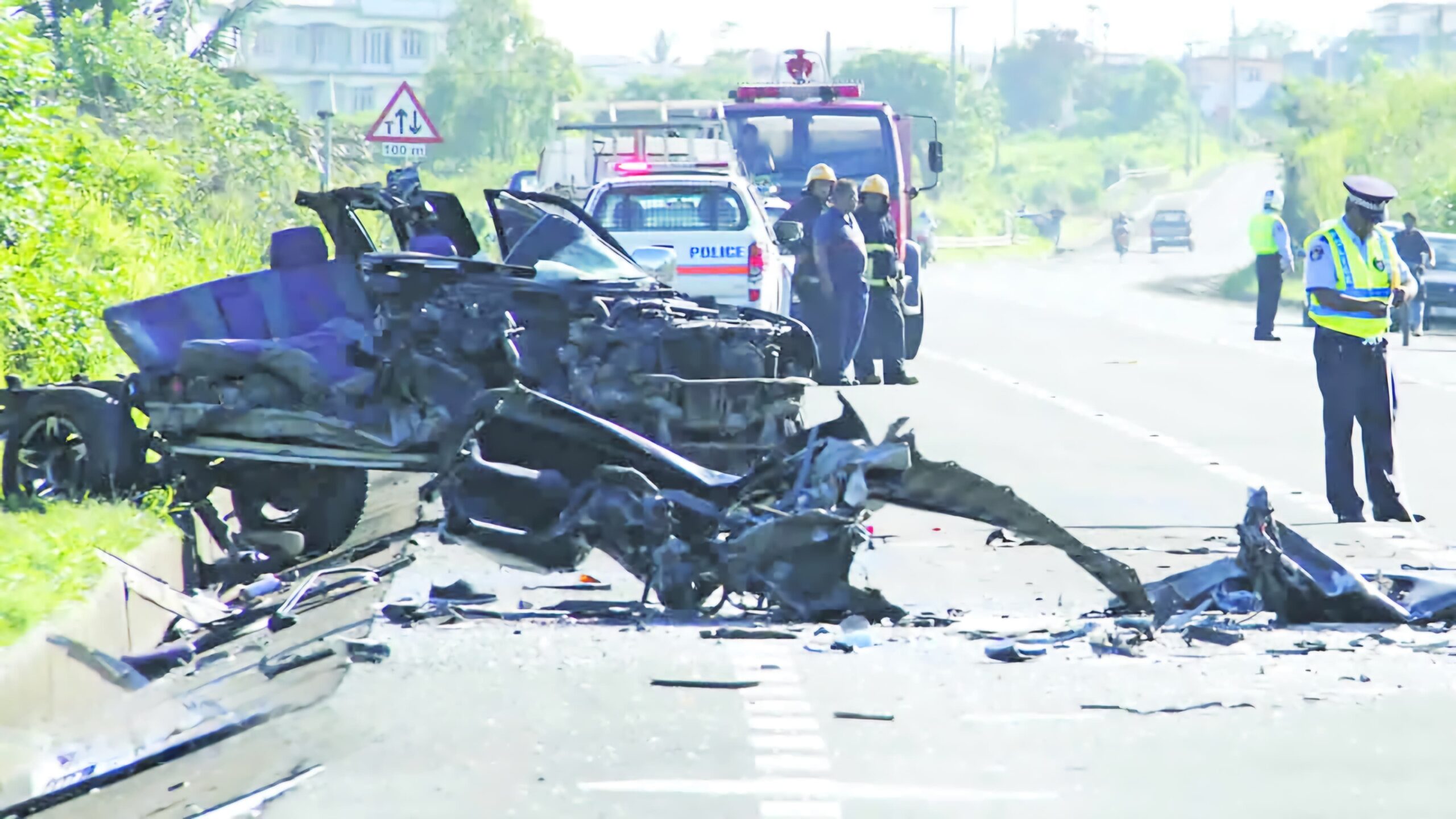
Road safety remains a top priority as the new year begins. In 2023, the number of road fatalities reached 138 from 130 fatal accidents. The year 2024 ended on a somber note with a tragic incident involving Mohammed Sidick Heeroo, 42, and his mother, Bibi Massoom Heeroo, 70, who lost their lives in a car collision at Rivière-du-Poste on December 30. By the same date in 2024, road fatalities had decreased slightly to 132 from 123 fatal accidents. However, the situation for motorcyclists, drivers, and passengers remains deeply concerning.
Alarming Statistics of Road Accidents and Road Safety Measures
In 2024, a catastrophic accident in Beaux-Songes claimed four lives. According to Sergeant Valery Uppiah of the Traffic Branch, “Since the start of this year, 132 people have lost their lives in 123 fatal accidents compared to 138 fatalities from 130 accidents in the previous year. While these figures show a slight decline, they are still alarming, reminding us of the human lives and shattered dreams behind each number.”
He further emphasized, “Survivors, families, and colleagues of accident victims often bear deep physical and emotional scars. Each life changed forever by a road accident highlights the collective responsibility we all share to make our roads safer.”
The Role of Collective Responsibility in Road Safety
“Everyone has a role to play in ensuring safer roads. Improved infrastructure, strict enforcement of road safety laws, and continuous awareness campaigns among road users are critical. Beyond being a moral duty, it is a collective responsibility that requires profound changes in our attitudes and behaviors,” noted Sergeant Uppiah. The police remain committed to ensuring safer roads through rigorous efforts and collaborative measures.
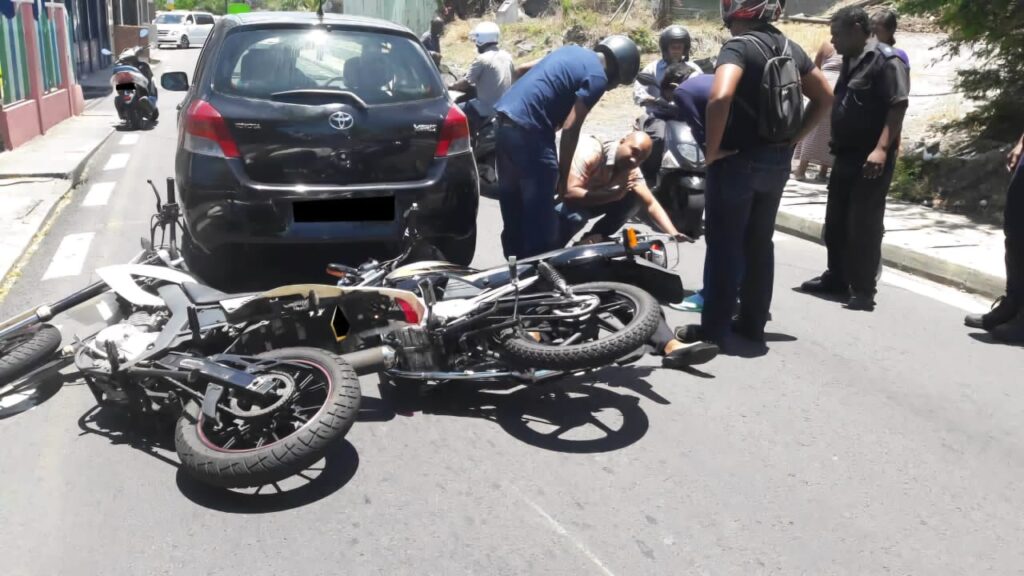
Strategic Actions to Reduce Accidents and Enhance Road Safety
Preventive Measures and Awareness
Sergeant Uppiah outlined key strategies employed to curb accidents:
- Focused Prevention: Laws are effective when the public understands their purpose. Road safety laws aim to protect lives, and non-compliance must be met with appropriate sanctions.
- Risk Zone Management: Identifying high-risk areas and implementing corrective actions are vital steps in mitigating potential hazards.
- Targeting Offenders: Special attention is given to individuals and professional drivers who violate traffic laws.
- Behavioral Management: Increased awareness campaigns aim to encourage proactive actions rather than reactive responses.
- Multi-Organizational Collaboration: Civil and public organizations work together to foster a collective awakening on road safety.
Despite these efforts, the fight against road fatalities remains challenging. “Even one death is too many,” said Sergeant Uppiah. “The goal for 2025 is to eliminate fatal accidents entirely. Achieving a fatality-free road system is possible, but it requires significant behavioral and attitudinal shifts.”
Ambitious Measures to Reduce Fatalities
The Ministry of Transport has developed a comprehensive plan to enhance road safety sustainably. In alignment with the second Decade of Action for Road Safety by the United Nations, the Traffic Management and Road Safety Unit (TMRSU) aims to reduce road deaths and injuries by 50% by 2030 under the “Safe System” approach.
Key Measures to Strengthen Road Safety
Establishing a National Road Safety Agency
The creation of the National Road Safety and Traffic Agency is a top priority. This body will coordinate road safety efforts, develop policies, and monitor their implementation through a technical secretariat.
Improving Infrastructure for Vulnerable Users
Modernized infrastructure, such as well-lit pedestrian crossings and protective barriers, will aim to reduce accidents involving pedestrians and cyclists—a significant portion of road casualties.
Leveraging Smart Technologies
Advanced traffic management systems will optimize road use with sensors, dynamic signage, and automated speed control mechanisms. These technologies are expected to alleviate congestion and minimize accident risks.
Enforcing Laws and Strengthening Penalties
The installation of speed cameras and automated detection systems at traffic signals will discourage dangerous behavior. Additionally, a fixed-penalty system will ensure swift and effective law enforcement.
Proactive Road Inspections
An in-depth inspection of 300 km of major roads will identify and address hazardous points to improve safety conditions and prevent accidents.
Addressing High-Risk Zones
Targeted interventions will be implemented in 35 high-risk road sections and 10 accident-prone areas to mitigate risks for road users.
Educational Campaigns and Awareness
Educational programs and media campaigns will promote good practices and raise public awareness of road safety.
Traffic Modeling for Long-Term Planning
A dedicated traffic modeling unit will analyze flow patterns and infrastructure projects, focusing on reducing congestion and enhancing safety.
Integrating Road Safety Education
Structured road safety education will be introduced at the primary school level to instill responsible behavior from a young age. Additionally, the Road Safety Observatory will be revamped to analyze accident data and refine safety policies.
A Promising Future for Safer Roads
By adopting these measures, Mauritius positions itself as a proactive player in the global effort to create safer roads. The TMRSU, in collaboration with various stakeholders, is committed to turning these initiatives into tangible outcomes for all Mauritians.
Commitment from the Minister of Transport
Transport Minister Osman Mohamed has reiterated his dedication to transforming planned measures into concrete actions, striving to meet the UN’s road safety objectives.
Addressing Survivors and Fatalities
The minister highlighted the importance of focusing on survivors and their challenges. “Many survivors suffer from debilitating injuries, such as amputations or severe head trauma, with repercussions extending to their families and the economy,” he noted. Gathering detailed statistics on disabling injuries and their psychological impacts will aid in understanding and addressing these issues more effectively.
Rising Accidents
With over 700,000 vehicles, including nearly half being motorcycles, the growing number of vehicles proportionally increases the risk of accidents. “Promoting public transport is a viable solution to explore further,” the minister added.
Ongoing Awareness Campaigns
Nationwide campaigns are already underway. “I have personally participated in speed checks at Grand-Baie, distributed safety vests, and attended road safety awareness sessions,” shared the minister.
Through these multifaceted efforts, Mauritius aims to ensure that road safety becomes a shared responsibility, reducing fatalities and injuries, and fostering a culture of accountability and care among all road users.
Courtesy of Defi Media
For article publication inquiries, feel free to get in touch.