

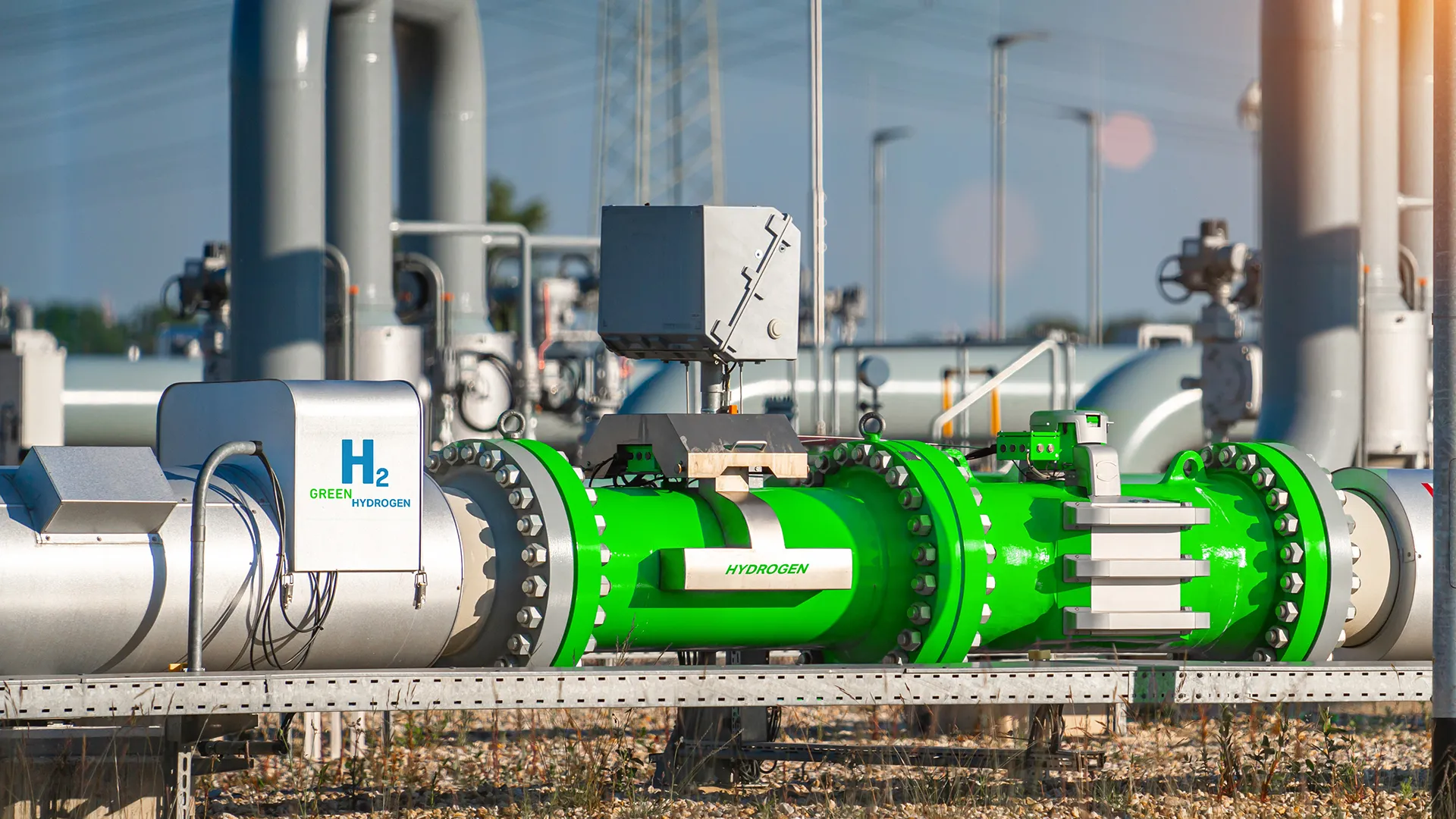
Boron-Doped Cobalt Phosphide (B-CoP): The Future of Clean Hydrogen
The world urgently needs clean energy alternatives. Fortunately, hydrogen offers high energy density with zero emissions. While producing hydrogen affordably remains challenging, a new boron-doped cobalt phosphide (B-CoP) catalyst could revolutionize production by lowering costs and improving efficiency.
Why Boron-Doped Cobalt Phosphide (B-CoP) is a Game-Changer
The Promise of Hydrogen as a Clean Energy Source
Hydrogen is one of the most promising clean energy sources due to its high energy content and environmentally friendly combustion, which produces only water as a byproduct. Unlike fossil fuels, hydrogen does not contribute to greenhouse gas emissions, making it a key player in global efforts to combat climate change.
Currently, one of the most sustainable hydrogen production methods is electrochemical water-splitting, which uses electricity to break water (Hâ‚‚O) into hydrogen (Hâ‚‚) and oxygen (Oâ‚‚). When powered by renewables like solar or wind, this method offers a completely green pathway. Yet, a major obstacle has been the reliance on expensive rare-metal catalysts like platinum and iridium, which drive up costs.
The Challenge of Current Hydrogen Production Methods
Traditional methods like steam methane reforming are cost-effective but rely on fossil fuels, generating significant COâ‚‚ emissions. In contrast, electrochemical water-splitting is cleaner but has been hindered by costly catalysts.
Transition metal phosphides (TMPs) have emerged as promising alternatives due to their catalytic properties, particularly in the hydrogen evolution reaction (HER). However, their performance in the oxygen evolution reaction (OER)—the other critical half of water-splitting—has been suboptimal. To overcome this, researchers have explored doping these materials with elements like boron. Until now, synthesizing such materials posed significant challenges—but breakthroughs in B-CoP may finally provide a solution.
How Boron-Doped Cobalt Phosphide (B-CoP) Works
The Science Behind B-CoP’s Superior Performance
A research team led by Professor Seunghyun Lee at Hanyang University has developed a revolutionary catalyst using boron-doped cobalt phosphide (B-CoP). Remarkably, this innovation could make large-scale hydrogen production both affordable and efficient.
Synthesis and Structure of Boron-Doped Cobalt Phosphide (B-CoP)
The team used cobalt-based metal-organic frameworks (MOFs) as precursors, leveraging their porous structure for precise control. Specifically, the process involved:
- Growing cobalt MOFs on nickel foam (NF)Â for stability.
- Introducing boron via a post-synthesis modification (PSM) reaction.
- Phosphorization to form boron-doped cobalt phosphide (B-CoP) nanosheets.
Among three tested samples, the optimized version (B-CoP0.5@NC/NF) demonstrated the best performance.
Key Advantages of Boron-Doped Cobalt Phosphide (B-CoP)
Critically, B-CoP offers:
- Enhanced Efficiency: Low overpotentials (248 mV for OER, 95 mV for HER), reducing energy needs.
- Cost Reduction: Replaces rare metals with abundant, cheaper materials.
- Long-Term Stability: Maintains performance for over 100 hours.
- High-Current Performance: Outperforms state-of-the-art catalysts like RuOâ‚‚ and Pt-C.
Boron-Doped Cobalt Phosphide (B-CoP) in Industrial Applications
Implications for Large-Scale Hydrogen Production
With B-CoP, green hydrogen adoption could accelerate in transportation, energy storage, and manufacturing. By eliminating reliance on rare metals, this breakthrough makes electrochemical water-splitting viable for mass production.
Economic and Environmental Impact of B-CoP
- Lower Costs: Could cut hydrogen fuel prices by up to 50%.
- Scalability: Synthesis is adaptable for industrial use.
- Zero Emissions: Enables truly green hydrogen when paired with renewables.
Future Prospects for Boron-Doped Cobalt Phosphide (B-CoP)
Next Steps in B-CoP Research
While promising, further research is needed to optimize B-CoP for commercial use. Key priorities include:
- Extending durability beyond 100 hours.
- Testing other dopants to boost performance.
- Developing hybrid systems for even greater efficiency.
Conclusion: B-CoP as a Catalyst for Change
The discovery of B-CoP marks a turning point in sustainable hydrogen production. By addressing cost and efficiency barriers, it paves the way for a clean energy future. As research advances, B-CoP could become a cornerstone of the hydrogen economy, helping combat climate change.
Final Thoughts
With hydrogen poised to reshape global energy systems, breakthroughs like B-CoP bring us closer to a carbon-neutral world. As this technology evolves, green hydrogen may soon become a mainstream reality.
Courtesy of ScienceDaily
For article publication inquiries, feel free to get in touch