

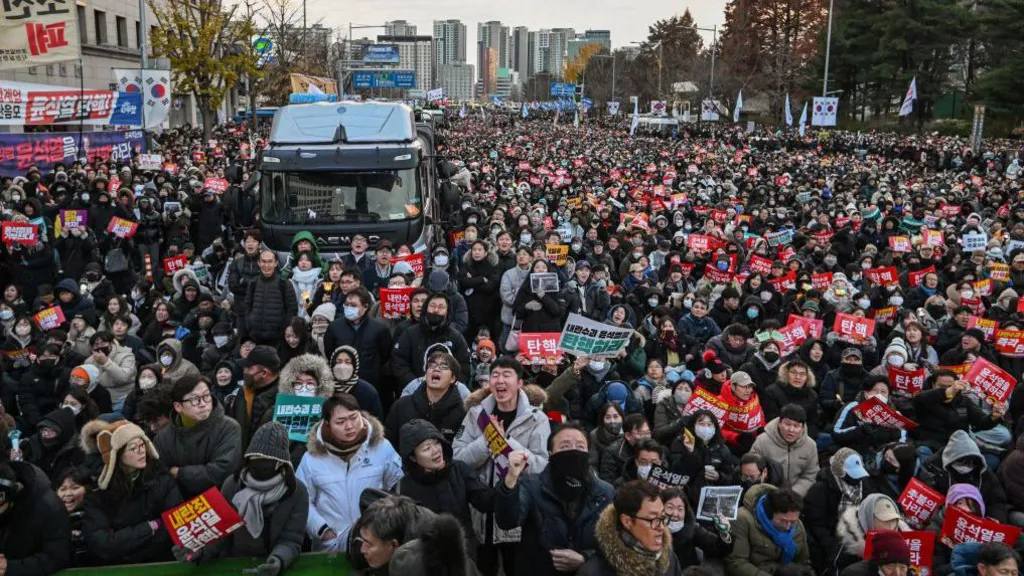
South Korea recently held a sudden presidential vote following the dramatic ousting of former leader Yoon Suk Yeol. His controversial decision to impose martial law in December led to his impeachment, plunging the nation into political chaos. The election, held on June 3, will determine who takes charge of stabilizing the country amid economic uncertainty and diplomatic challenges.
How Martial Law Forced South Korea’s Snap Presidential Election
Yoon Suk Yeol shocked the nation when he declared martial law on December 3, claiming threats from “anti-state forces” and North Korea. Critics immediately accused him of political motives, sparking mass protests.
The Impeachment Process
Parliament swiftly impeached him, and on April 4, the Constitutional Court upheld the decision, forcing an early election within 60 days.
Interim Leadership Changes
The martial law crisis created unprecedented instability, with three different leaders temporarily taking charge. Education Minister Lee Ju-ho served as the final acting president before the election.
Key Election Issues Shaped by the Martial Law Crisis
The fallout from the martial law declaration deepened political divisions, with citizens split between supporters and opponents of Yoon’s decision. The economic impact of the turmoil, combined with new U.S. tariffs under President Donald Trump, has further strained South Korea’s economy.
Relations with North Korea remain tense, despite a relatively calm 2025. The previous year saw heightened hostilities, including propaganda balloon campaigns. The new president must also navigate delicate ties with China and the U.S., balancing trade and security interests.
Another pressing issue is South Korea’s record-low birth rate (0.75), which threatens long-term economic stability. Addressing this demographic crisis will be a major challenge for the incoming administration.
Who Could Be the Next President?
Exit polls from major broadcasters (KBS, MBC, SBS) suggest Democratic Party candidate Lee Jae-myung is the likely winner. A former human rights lawyer, Lee narrowly lost to Yoon in 2022 and has campaigned on economic fairness and job creation.
His closest rival, Kim Moon-soo of the ruling PPP, promised a business-friendly approach. Other candidates included Lee Jun-seok (New Reform Party) and independents Hwang Kyo-ahn and Song Jin-ho. Notably, this was the first election in 18 years without a female candidate.
When Will Results Be Announced?
Voting took place from 6:00 AM to 8:00 PM local time on June 3, with overseas voting held earlier. The winner is expected to be confirmed by early June 4. The new leader will take office immediately, unlike past presidents who had transition periods.
Yoon Suk Yeol’s Future After the Martial Law Controversy

Yoon faces trial for insurrection over his martial law order. In January, he became the first sitting South Korean president arrested, though he was later released on a legal technicality. He also faces separate abuse-of-power charges. Before the election, he left his party, possibly to avoid damaging its candidate’s chances.
Conclusion: South Korea’s Path Forward After Martial Law
The election starts recovery. The new president must unite the nation and fix the economy.
Courtesy of BBC
For article publication inquiries, feel free to get in touch.