

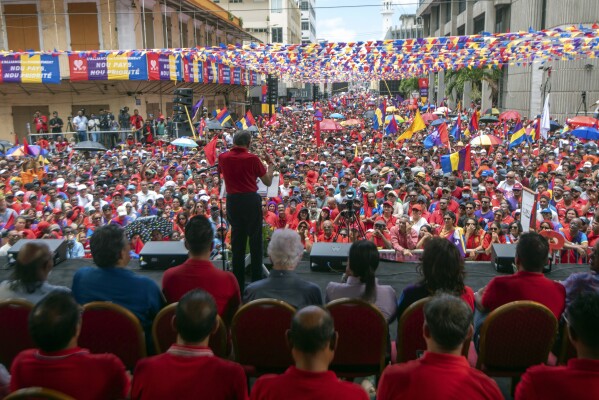
History has repeated itself for the general elections 2024, but this time with unprecedented intensity. The Alliance of Change delivered a decisive blow to the Militant Socialist Movement (MSM) by achieving a historic 60-0 victory—the third such result since Mauritius gained independence. This electoral humiliation reshapes the political landscape, marked by staggering margins between candidates.
The “orange house” of the MSM collapsed like a house of cards. The MSM, leading the Alliance Lepep, suffered its second 60-0 defeat. This loss is even more pronounced than the one in 1995 when the Ramgoolam-BĂ©renger tandem secured an overwhelming victory. The first 60-0, in 1982, was inflicted on the Labour Party. The Alliance of Change’s triumph sparked jubilant celebrations across the nation.
In Triolet, a constituency reclaimed by Navin Ramgoolam after his 2014 defeat, thousands of residents celebrated late into the night. Chants of “Allez Navin,” “Navin napa kile,” and the heartfelt singing of “BLD” resonated through the streets. This victory united the country, symbolizing a collective rejection of the existing system and a clarion call for profound change. It also ignited immense hope for the future. Pravind Jugnauth, who had faced defeat in 2005 when he failed to secure a seat despite being Deputy Prime Minister, now endured outright humiliation.
This third 60-0 echoes the historic defeat of 1982, with similarly vast gaps in votes between third and fourth-placed candidates. One striking example is Constituency No. 4 (Port Louis North/Montagne Longue), where Ludovic Caserne, the third-elected candidate, led Adrien Duval, the fourth, by 11,555 votes. In Constituency No. 8 (Quartier Militaire/Moka), outgoing Prime Minister Pravind Jugnauth suffered defeat in his stronghold, losing by a margin of 3,726 votes to newcomer Govinden Venkatasami. Alan Ganoo, undefeated since 1982, was also dealt a crushing blow in Constituency No. 14, losing by an extraordinary 15,182 votes to third-elected candidate VĂ©ronique Leu-Govind.
Ivan Collendavelloo fared no better, finishing seventh in Constituency No. 19 (Stanley/Rose-Hill), trailing Sydney Pierre, the third-elected candidate, by 8,373 votes. As for Xavier-Luc Duval, his decision to part ways with Navin Ramgoolam and Paul Bérenger, only to reform Alliance Lepep with Pravind Jugnauth, proved disastrous. His 180-degree turn—from Leader of the Opposition criticizing the government to supporting the same government’s record—came at a heavy price. Having previously won four elections in Constituency No. 18 (Belle-Rose/Quatre-Bornes), he ended this time in fourth place, lagging 15,999 votes behind Veda Baloomoody, the third-elected candidate.
The voter turnout of 79.30% is equally notable. Out of 1,002,857 registered voters, 795,243 cast their ballots, marking the highest participation rate since the 2010 general elections. During the last 60-0 in 1995, voter turnout stood at 79.40%, while in 1982, it reached an impressive 88.84%.
Data from the Electoral Commissioner’s Office reveals stronger voter mobilization in rural and semi-rural areas. While none of the first four constituencies exceeded a 76% turnout, ten constituencies—ranging from Constituency No. 5 (Pamplemousses/Triolet) to Constituency No. 16 (Vacoas/Floréal)—surpassed the 80% threshold. Constituency No. 8 recorded the highest turnout at 84.98%, followed closely by Constituency No. 13 (Rivière-des-Anguilles/Souillac), with a turnout of 84.55%. Notably, this constituency featured ministers Renganaden Padayachy and Kailesh Jagutpal. In contrast, the final five constituencies recorded turnouts below 78%, with Rodrigues reporting the country’s lowest at 69.07%.
These figures underscore a strong desire for change, particularly in constituencies with turnout exceeding 80% for the general elections 2024. Voters in these areas appeared determined to make their voices heard and to express their dissatisfaction with the status quo. The result is a resounding mandate for the Alliance of Change, signalling not just the rejection of a government but also a demand for a transformative vision for Mauritius.
This general elections outcome marks a turning point in the nation’s history. It is a rejection of complacency, corruption, and lack of accountability, offering a new beginning for Mauritian politics. With such a sweeping victory, the Alliance of Change faces the immense responsibility of living up to the electorate’s high expectations. Their mandate is clear: deliver the change the country has demanded, and transform this historic win into meaningful progress for all Mauritians.
Courtesy of Defi Media
For article publication inquiries, feel free to get in touch.