

A Rare and Colorful Celestial Pairing to Watch in June 2025
Stargazers and astronomy lovers have an exciting event this week: a close and stunning celestial conjunction between Mars and Regulus, the brightest star in Leo. This Mars and Regulus conjunction will light up the night sky and offer a breathtaking view for observers around the world.
When and Where to Watch
On 16 June 2025, viewers in London and many other locations can witness this striking sight. Around 11:00 PM British Summer Time (BST), the sky will darken enough to reveal these two brilliant objects close together. Furthermore, their visibility extends over several nights.
Why This Conjunction Is Special
This Mars and Regulus conjunction is unique because of how closely the two objects appear in the sky. They will be less than one degree apart, which is less than twice the width of the full moon. Therefore, they are easy to see with the naked eye and ideal for viewing with binoculars or a small telescope.
Striking Color Contrast
One reason this event is so memorable is the color contrast. Mars glows red due to iron oxide on its surface. In contrast, Regulus shines with a blue-white light, typical of hot stars. Consequently, the difference in color makes this pairing especially vivid.
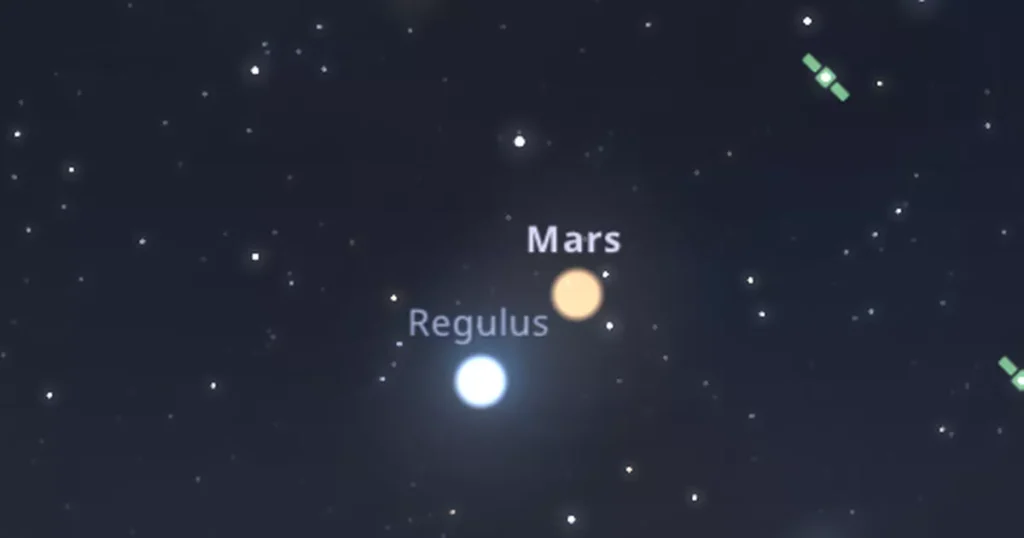
A Closer Look at Regulus and Mars
Regulus, or Alpha Leonis, is about 79 light years from Earth. It’s the 21st brightest star we can see and has over four times the mass of the sun. Additionally, it is slightly larger in diameter and gives off about 340 times more energy.
Mars is a rocky planet, orbiting the sun at about 228 million kilometers. It takes 687 Earth days to circle the sun. Because of its dusty red surface, Mars has long captured human interest.
Viewing Tips and Equipment
During this Mars and Regulus conjunction, both objects will fit within a single view through binoculars. This is a rare chance to observe their close pairing. Since Mars moves along its orbit, while Regulus stays fixed in its place in the constellation, their separation will increase gradually.
Even after 16 June, the two will remain close for several days. As the week passes, they will slowly move apart. Nevertheless, the view will still be impressive.
Visibility from the Southern Hemisphere
People in the southern hemisphere can enjoy the show too. From places like Australia and South Africa, the Mars and Regulus conjunction will appear in the north-north-west. Although the angle may be different, the visual effect will be just as stunning.
Bonus Event: Moon Near Saturn
Besides the Mars and Regulus event, there’s more to see. On 19 June, the moon will appear close to Saturn in Pisces. This adds to the month’s skywatching highlights and offers more chances to observe interesting pairings. As a result, June becomes a great time for night sky observations.
Educational and Cultural Significance
For newcomers to astronomy, a conjunction happens when two celestial bodies appear close together in the sky. These events are not only beautiful but also great for learning about planets and stars.
To view the Mars and Regulus conjunction best, go to a spot with low light pollution and a clear view of the western sky. Moreover, using binoculars or a telescope offers a better look. A tripod-mounted camera can help capture the scene, but just seeing it may be enough to leave a lasting impression.
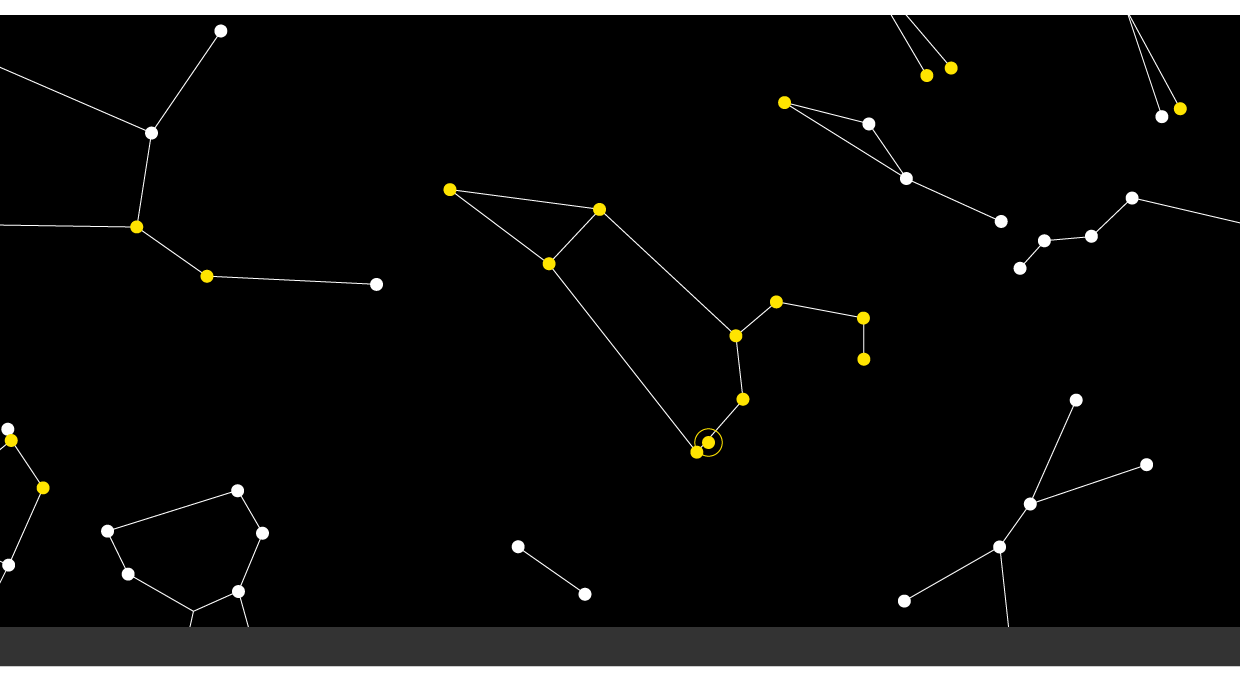
You don’t need equipment to enjoy the event. Simply look for Mars’s red glow near the blue-white shine of Regulus in the Leo constellation. Since Leo is one of the more recognizable shapes in the sky, locating the pair is fairly easy.
This moment is more than an astronomy lesson. It invites reflection and connection with the cosmos. While ancient cultures viewed such pairings as signs from the gods, today they remind us of our place in the universe and the wonders of space.
Great Opportunity for Engagement
Teachers can use this conjunction to get students interested in astronomy. Likewise, amateur astronomers can photograph and share the event. It’s a chance to enjoy and learn together.
Final Thoughts
To sum up, the Mars and Regulus conjunction is a must-see in June. It offers beauty, rarity, and learning opportunities. Whether you’re an expert or a beginner, don’t miss the chance to see Mars and Regulus light up the sky.
Quick Tips for Observing the Mars and Regulus Conjunction:
- Best viewing date: 16 June 2025
- Time: Around 11:00 PM local time
- Location: Western sky, constellation Leo
- Equipment: Naked eye, binoculars, or small telescope
- Bonus event: Moon near Saturn on 19 June
Mark your calendars and get ready for a fantastic night under the stars. The Mars and Regulus conjunction is an event worth watching!
Courtesy of The Guardian
For article publication inquiries, feel free to get in touch