

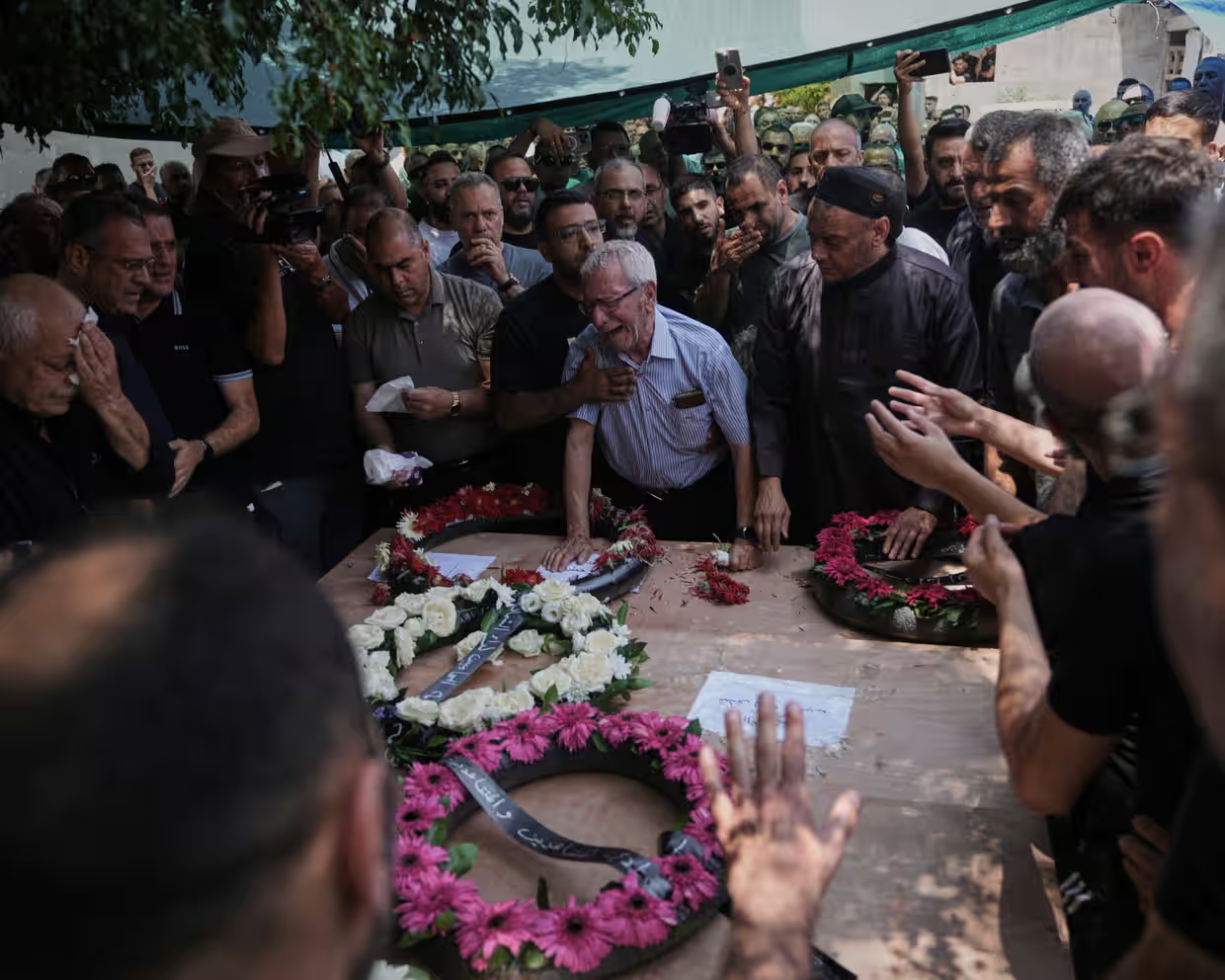
The Israel-Iran conflict is getting worse. After five days of Israeli airstrikes and Iranian missile attacks, many fear the war could get bigger. U.S. President Donald Trump made the situation more tense on Tuesday. He demanded that Iran “unconditionally surrender.” He also hinted that the U.S. might take military action.
Trump called a meeting with his national security team at the White House. During the day, he gave mixed messages about U.S. involvement. At first, he said Israel would handle Iran’s nuclear sites alone. Later, he warned about hitting Iran’s Supreme Leader, Ayatollah Ali Khamenei.
On his social media, Truth Social, Trump said:
“We know where the ‘Supreme Leader’ is hiding. He is an easy target but safe there – We won’t kill him… at least not now.”
He added:
“But we won’t accept missiles hitting civilians or American soldiers. Our patience is running out.”
Shortly after, Trump posted in all caps:
“UNCONDITIONAL SURRENDER.”
Mixed Messages on U.S. Military Role
Trump’s strong words, plus the move of U.S. military planes to Europe and the Middle East, worried many. People think Israel can’t destroy Iran’s underground nuclear sites without U.S. help.
Still, UK Prime Minister Keir Starmer said the U.S. is unlikely to join the fighting.
“The president gave no sign that the U.S. will get involved,” Starmer said. He mentioned the G7 leaders want calm.
Vice President JD Vance wrote on social media:
“The president may decide to act more on Iranian nuclear work. That choice is his.”
He also said people are right to worry about U.S. involvement overseas again.
World Leaders Call for Calm
German Chancellor Friedrich Merz said on TV:
“If Iran does not stop, the full destruction of its nuclear program is planned, something Israel can’t do alone.”
He said this after meeting Trump at the G7 summit.
French President Emmanuel Macron warned:
“Israel has the right to defend itself, but military actions that cause more chaos in the region are wrong. Trying to force regime change in Iran would bring disaster.”
Israel Hits Tehran Harder
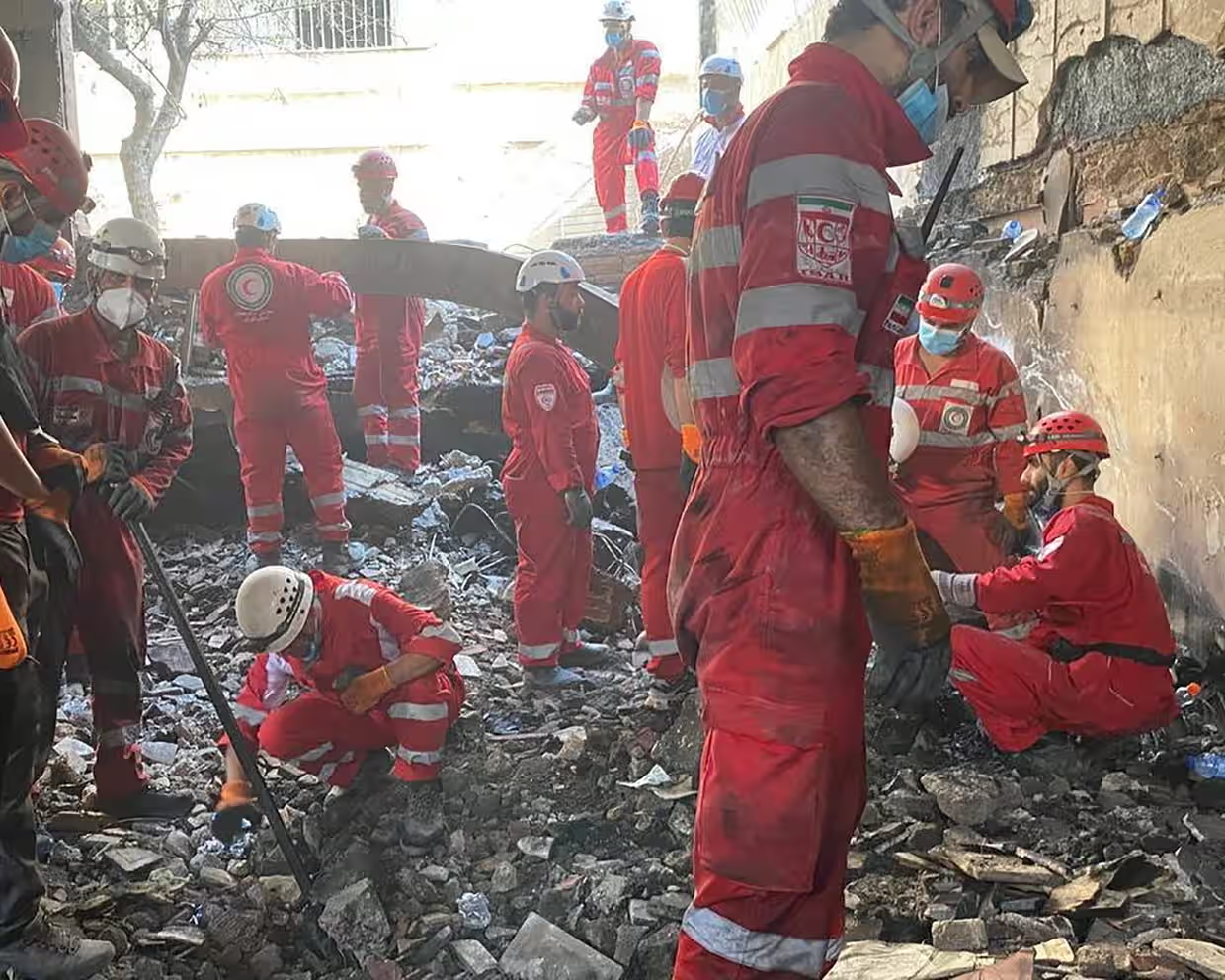
Israel widened its attacks, hitting Tehran’s northern parts. Hundreds of thousands had to leave their homes. Explosions near Mehrabad Airport damaged homes and military places.
A state TV station got hit, killing three workers and stopping broadcasts. Israel also bombed oil and gas sites to hurt Iran’s economy.
Iran Fires Missiles Back
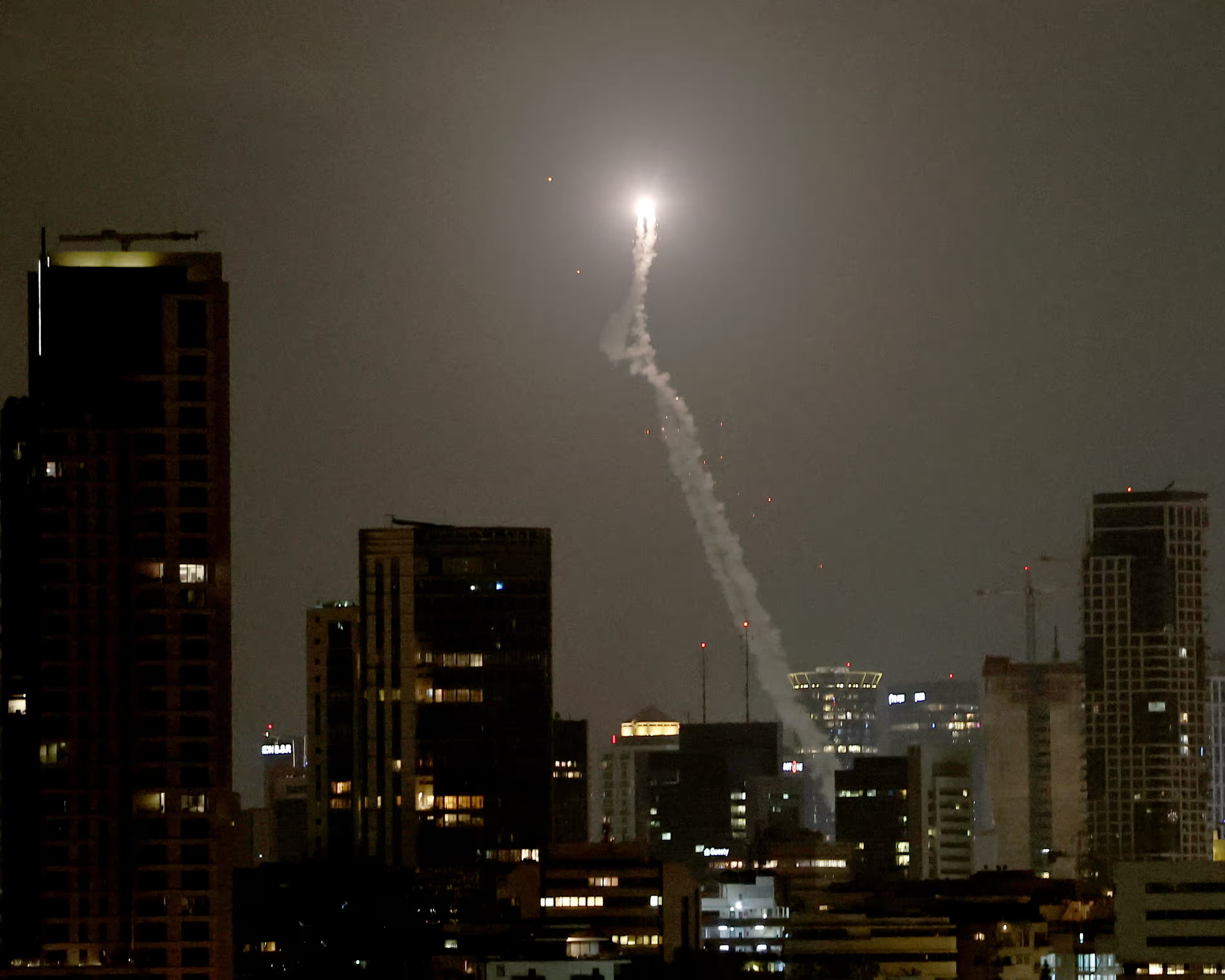
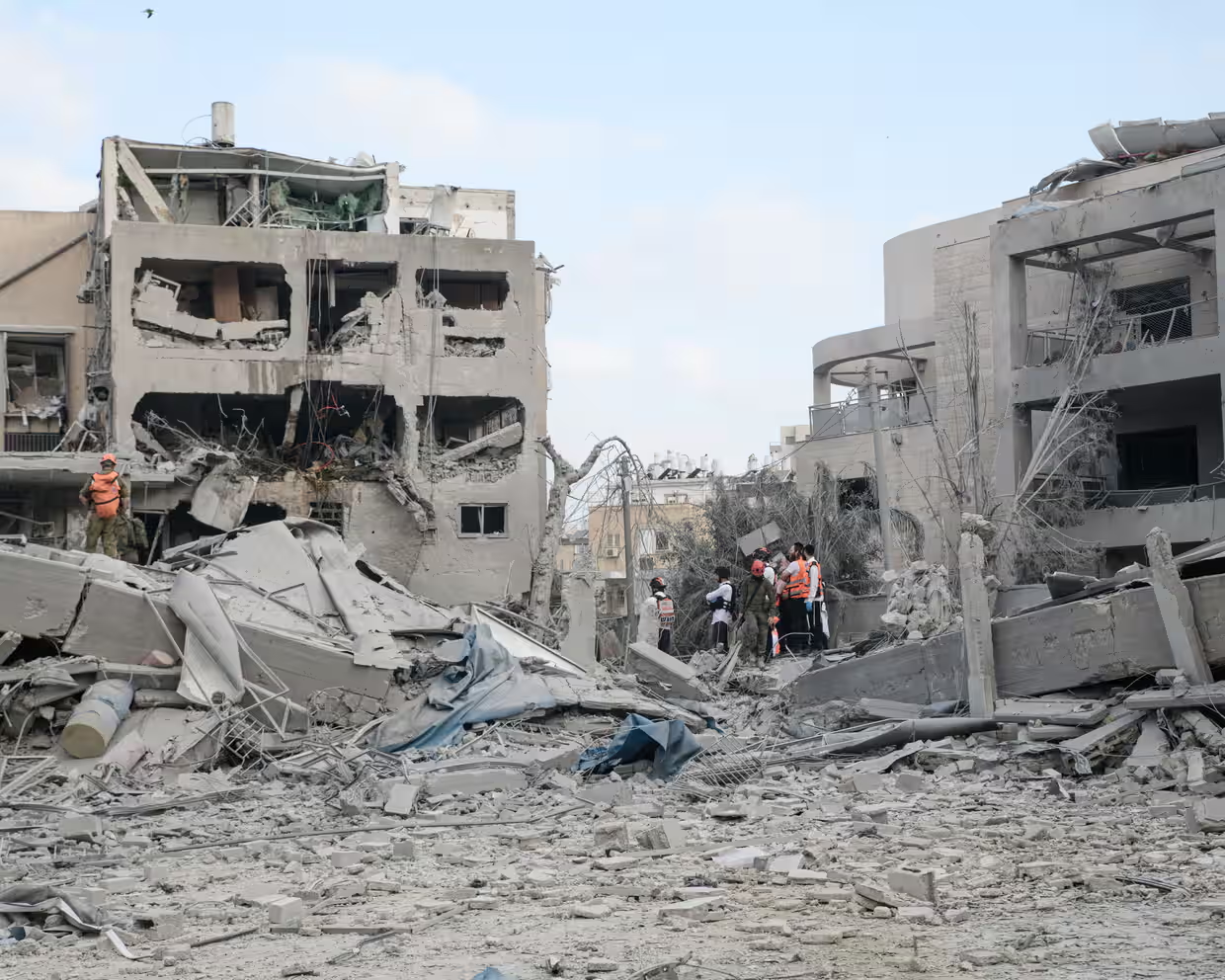
Iran launched about 30 missiles at Israel. Only five people got hurt. Israel’s army said it stopped most missiles and destroyed about 200 Iranian missile launchers, half of Iran’s stock.
Iran warned people in Haifa and Tel Aviv to evacuate just in case.
Talks Might Still Happen
Iran’s Foreign Minister Abbas Araghchi said Iran is ready to talk if the U.S. wants peace.
“If President Trump wants to end the war, we are open to talks. But next steps must matter,” he said.
So far, Iran says over 224 people died and 1,400 were hurt from Israeli strikes. Israel reported 24 dead and about 600 hurt.
Nuclear Concerns and Military Goals
Israel said Iran is close to making a nuclear bomb. But U.S. intelligence says Iran is still three years away. Trump ignored this and said Iran is very close.
Israeli Prime Minister Benjamin Netanyahu named three goals: destroy Iran’s nuclear program, stop its missile work, and cut off support for militant groups.
Foreign Minister Gideon Sa’ar said they want to cut off the “tentacles of the octopus” — meaning Hamas and Hezbollah.
The International Atomic Energy Agency said Israeli strikes reached underground parts of Iran’s Natanz site. Now, attention is on Fordow near Qom, where Iran keeps enriched uranium.
An expert, Kelsey Davenport, said bombing Fordow would only cause radiation at the site.
Bigger Regional Effects
Some hardliners in Iran want to block the Strait of Hormuz. Nearly 17 million barrels of oil pass through there daily. Blocking it would raise oil prices and hurt the global economy.
Israel says it has weakened Iran’s military by killing top generals, including acting commander Maj Gen Ali Shadmani.
Iran’s parliament plans to leave the 1968 nuclear non-proliferation treaty. The government says it still opposes nuclear weapons.
As the conflict goes into day six, the world watches closely. U.S. military moves and tough words show the crisis may get worse. The Israel-Iran conflict could change the Middle East and world peace.
Courtesy of The Guardian
For article publication inquiries, feel free to get in touch