

Ukraine Marks Three Years of War with Renewed Hope
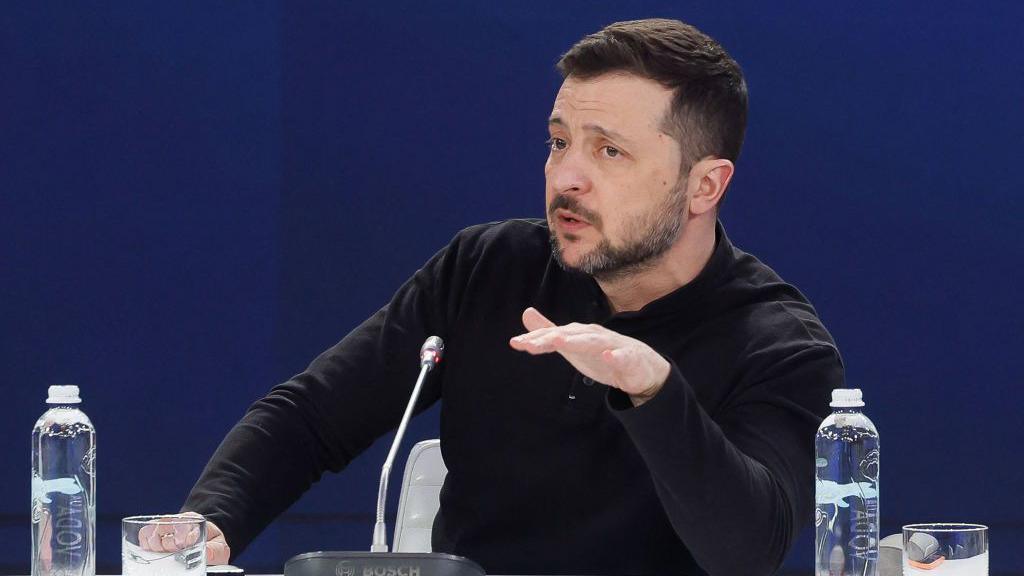
On the third anniversary of Russia’s full-scale invasion, the President of Ukraine, Volodymyr Zelensky expressed optimism about ending the war this year. Speaking at a summit with European leaders in Kyiv, he emphasized the need for security guarantees to prevent future attacks from Moscow. He also highlighted Ukraine’s goal of joining the European Union (EU) and NATO.
Zelensky’s Call for Security Guarantees
At a news conference, Zelensky said, “We hope that we can finish the war this year.” He acknowledged the immense hardships Ukraine has endured but stressed the importance of long-term security. He believes NATO and EU membership would help deter future Russian aggression.
Russia strongly opposes Ukraine’s NATO ambitions, claiming it threatens its own security. Despite this, Zelensky remains committed to securing Ukraine’s place in Western alliances.
Peace Talks and Prisoner Exchange
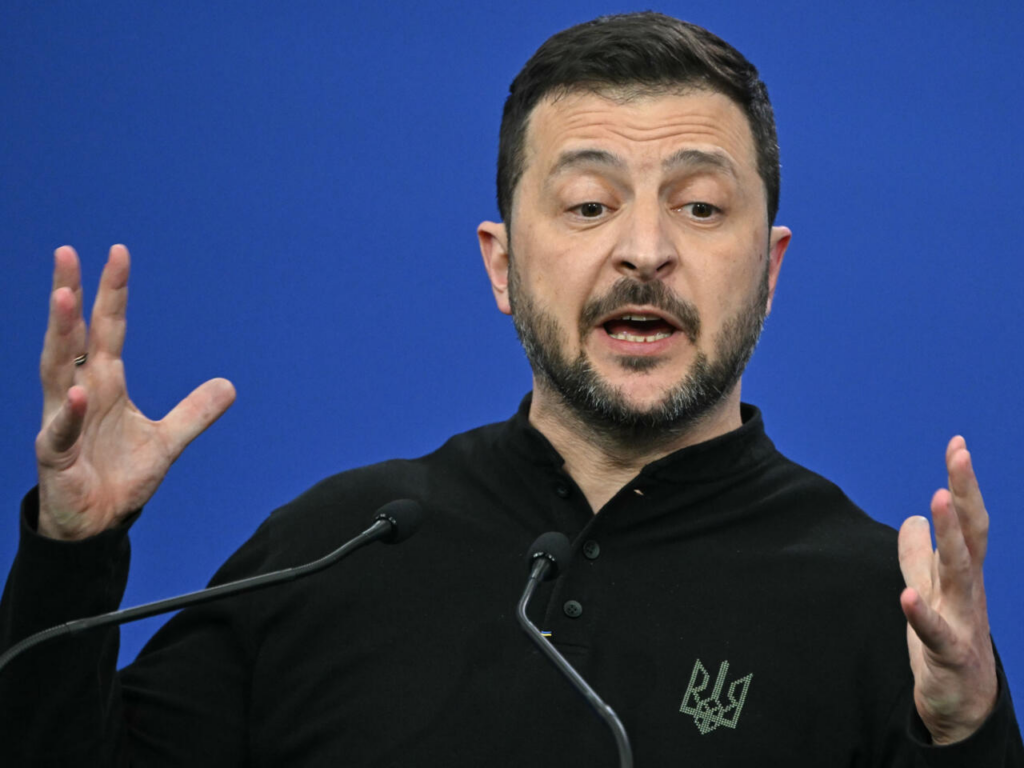
Earlier, Zelensky proposed that peace talks could start with a “full” prisoner exchange between Ukraine and Russia. Since the war began, both sides have conducted 60 prisoner swaps, including a major exchange in December.
“This is the fair and just option,” Zelensky stated. Thousands of Ukrainians remain detained in Russia, including some held since the annexation of Crimea in 2014. Ukraine has not disclosed the exact number of its soldiers in Russian captivity, but estimates suggest over 8,000 remain imprisoned.
Zelensky on U.S. Relations and Trump
During the press conference, Zelensky avoided direct comments on President Donald Trump but expressed hope that U.S. support for Ukraine would continue.
Last week, Trump called Zelensky a “dictator” and criticized his leadership. This came after Zelensky accused Trump of “living in a disinformation space” influenced by Moscow.
Trump has advocated for a “quick peace,” which many fear would require Ukraine to make major territorial concessions. His stance has raised concerns about the future of U.S. support for Ukraine if he wins the upcoming election.
International Support and European Summit
Several key European leaders attended the Kyiv summit, including:
- European Commission President Ursula von der Leyen
- European Council President Antonio Costa
- Canadian Prime Minister Justin Trudeau
- Leaders from Denmark, Iceland, Latvia, Lithuania, Finland, Norway, Spain, and Sweden
Other leaders from the UK, Germany, and Japan joined via video. Notably, there was no U.S. representative at the event.
Trudeau strongly backed Ukraine, saying, “Might no longer means right in this world.” His statement referenced recent U.S.-Russia diplomatic talks. Meanwhile, Danish Prime Minister Mette Frederiksen expressed openness to sending peacekeeping troops to Ukraine but said many issues must be resolved first.
Ukraine’s EU Membership Goal
European Commission President Ursula von der Leyen stated that Ukraine’s path to EU membership remains on track. She noted that if Ukraine continues its reforms and maintains strong governance, it could join the EU before 2030.
Von der Leyen wrote on X (formerly Twitter), “In this fight for survival, it is not only the destiny of Ukraine at stake. It’s Europe’s destiny.”
Macron’s Meeting with Trump and Its Impact
The Kyiv summit occurred just before French President Emmanuel Macron’s scheduled meeting with Trump in Washington, D.C. Ukraine is expected to be a key topic.
Many European leaders worry that Trump’s “America First” approach could shift U.S. foreign policy, reducing support for Ukraine.
The Devastating Cost of War
Since Russia launched its full-scale invasion three years ago, tens of thousands of soldiers and civilians have died. Entire cities lie in ruins, and millions of Ukrainians have been displaced.
Zelensky remains hopeful that the war could end within the year. However, experts warn that peace remains uncertain, as Russia shows no signs of retreating.
As Ukraine fights for international support, military aid, and stronger alliances, the world watches to see if diplomacy and resilience can bring an end to one of the most devastating conflicts of the 21st century.
For article publication inquiries, feel free to get in touch.